Mancetter-Hartshill White ware (MAH WH)
Five samples
General appearance
Essentially the same clay body served for the entire currency of this fabric. It is cream, sometimes
merging to pink-cream (10YR 8/2–8/3), as seen on
Plate 157a. Often it has a self-coloured slip,
which may be slightly darker (10YR 8/4, 2.5Y 8/2), although it is never as yellow or brown as on
Lincoln and
Lower Nene Valley mortaria.
Generally the
fabric has an irregular fracture and a smooth feel. Examples dating to the first half of the 2nd
century may be soft, while later products were often fired to a harder, smoother texture.
Hand specimen
The clay matrix is generally dense and well fired, usually with sparse inclusions
(Plate 157a). However, early examples (before
c AD 140) have slightly more quartz (sometimes to common) which gives them a sandier feel
(Plate 157b). Except as noted, all inclusions
are normally sparse and well-sorted subrounded and rounded quartz (0.3–0.4mm but rarely to 0.5mm,
occasionally polycrystalline), red and black iron-rich grains (0.1–1.2mm) and pale-coloured clay
pellets (up to 1.0mm) occur in decreasing order of importance. Two of our samples
(Plate 157d) contain sparse mixed trituration
grit (to
c 4.0mm) belonging to the general category outlined in the introduction to Mancetter-Hartshill
and described in thin section with
MAH WS. The remaining samples have trituration grits of
abundant, angular, densely packed and ill-sorted (to
c 5.0mm) red argillaceous fragments or, rarely, black ones
(Plate 157c). Typically, although not
represented here, black trituration grits will be more common.
Thin section
This sample has a groundmass containing abundant well-sorted quartz measuring <0.05mm. Other
inclusions are sparse, comprising primarily monocrystalline quartz, but frequently polycrystalline,
with less rounded to subangular fine-grained sandstone, flint, opaques and iron-rich clay pellets
measuring between 0.25–0.5mm, occasionally to 1.5mm. A single fragment of limestone measures 2.0mm. The
trituration grits, belonging to the type current after
c AD 140/50, consist of angular fragments of a brown argillaceous material to 2.0mm.
See the related record on the Atlas of Roman Pottery on the Potsherd website

Plate 157a: Fresh sherd break of MAH WH (fine variant) (width of field 24 mm)

Plate 157b: Fresh sherd break of MAH WH (sandy variant) (width of field 24 mm)
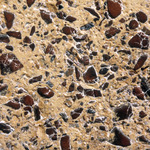
Plate 157c: Trituration grits on MAH WH (width of field 24 mm)

Plate 157d: Trituration grits on MAH WH (mixed trituration grits) (width of field 24 mm)

Plate 157.1: Photomicrograph of MAH WH (XPL) (width of field 1.74 mm)

Plate 157.2: Photomicrograph of trituration grits on MAH WH (XPL) (width of field 1.74 mm)
 SGRP home page