Baetican Fabrics
Three Baetican fabrics are included here and are described separately below. They share a range of general
inclusions, but are distinctive in their overall appearance and, in some cases, form.
Source
Fabrics 1 and 2 are commonly known and unequivocally allied with production sites along the Guadalquivir
(Ponsich 1988); the attribution of Fabric 3 is more tentative, but it comprises the same range of
inclusions and production sites are also known in the region for Peacock & Williams Class 31 – the only
recorded form in this particular fabric.
Donor
Museum of London
Museums
Nearly every British museum with an archaeological collection will house Peacock & Williams Class 25
amphorae, but outstanding collections – including other form types – can be found at The Roman Legionary
Museum, Caerleon; Colchester Museums; City Museum and Art Gallery, Gloucester; Museum of London; Jewry Wall
Museum of Archaeology, Leicester; Arbeia Roman Fort and Museum, South Shields; York Archaeological Trust;
Museo Arqueológic, Barcelona (Spain); Museo Arquelógico Provincial, Seville (Spain)
References
Beltrán Lloris, M, 1970 Las ánforas romanas en España, Zaragoza
Blázquez, J M, & Remesal Rodríguez, J (eds), 1980 Producción y comercio del aceite en la antigüedad, Primer Congreso Internacional, Madrid
Blázquez, J M, & Remesal Rodríguez, J (eds), 1983 Producción y comercio del aceite en la antigüedad, Segundo Congreso Internacional, Madrid
Carreras Monfort, C, & Williams, D F, 2003 Spanish olive-oil trade in late Roman Britain: Dressel 23 amphorae from Winchester, J Roman Pottery Stud 10, 64-8
(P&W26)
Colls, D, Etienne, R, Lequément, B, Liou, B, & Mayet, F, 1977 L’épave Port-Vendres II et le commerce de la Bétique à l’époque de Claude, Archaeonautica 1
(P&W31)
Funari, P P A, 1996 Dressel 20 inscriptions from Britain, BAR Int Ser 250
(P&W25)
Martin-Kilcher, S, 1987 & 1994 Die römischen Amphoren aus Augst und Kaiseraugst, Forschungen in Augst 7/1-3, Augst
Martin-Kilcher, S, Schupbach, S, Sern, W B, & Ballié, J, 1985 Keramikanalysen an römischen Ölamphoren aus Augst, Kaiseraugst, Avenches und Lausanne-Vidy. Naturwissenschaftliche und archäologische Aspekte, Jahrbuch der Schweizerischen Gesellschaft für Ur- und Frühgeschichte 68, 173–204
(P&W25)
Parker, A J, & Price, J, 1981 Spanish exports of the Claudian period: the significance of the Port Vendres II wreck reconsidered, Int J Naut Archaeol Underwater Explor 10, 221–8
(P&W31)
Ponsich, M, 1988 Aceite de oliva y salazones de pescado, Madrid
(P&W25)
Remesal Rodríguez, J, 1982 Die Ölwirtschaft in der Provinz Baetica: neue Formen der Analyse, Saalburg Jahrbuch 38, 31–71
(P&W25)
Remesal Rodríguez, J, 1989 Los tituli picti de las ànforas olearias de la Bética, Madrid
(P&W25)
Sealey, P R, 1985 Amphoras from the 1970 excavations at Colchester Sheepen, BAR 142
(P&W10, 15, 35)
Williams, D F, & Peacock, D P S, 1983 The importation of olive-oil into Roman Britain, in Producción y comercio del aceite en la antigüedad (eds J M Blázquez & J Remesal Rodríguez), Segundo Congreso Internacional, 263–80, Madrid
(P&W25)
Baetican (Early) amphorae 1 (BAT AM 1)
Seven samples
General appearance
This fabric is characterised by its pale brown to buff surfaces. It is particularly associated with
the early form variants of Peacock & Williams Class 25 (Dressel 20), but a similar fabric was used to
produce Peacock & Williams Class 15 (Haltern 70), Peacock & Williams Class 26 (Dressel 23) and in
some instances Peacock & Williams Classes 17–18 (Camulodunum 186) and Peacock & Williams Class 10
(Dressel 2–4). The surfaces tend to laminate and flake, especially on the thick walls of Class 25.
More specifically, the fabric is united by its surface colours, which are normally pale brown or buff
to very pale orange (10YR 7/3–7/4, 10YR 8/3–8/4). The break includes a wide variety of colours, recorded
here as pale green (5Y 7/1), grey-brown (10YR 6/2-5/2), pale grey (6/0), pale orange (2.5YR 6/8) or pale
brown (10YR 7/3), occasionally with either pale brown or brown-pink (5YR 7/3–7/4) margins. There is a
tendency for Peacock & Williams Classes 17–18 to have green-cream or cream (2.5Y 8/2–7/2, 5Y 8/2)
surfaces and a pale pink (2.5YR 7/6) core. Generally it is a harsh fabric, hard fired with a hackly
fracture.
Hand specimen
The fabric usually has a sandy matrix, with ill-sorted inclusions that vary considerably from sample
to sample. There is no apparent correspondence between fabric variations and form types. Most samples
have a micaceous (silver and gold) clay matrix, with 0.2–0.8mm the average inclusion size, although they
range between <0.1–2.5mm. Quartz, including polycrystalline, is common and is the most frequent
inclusion in the majority of samples. The remaining inclusions vary in quantity, but feldspar, limestone,
red-brown and dark sandstone, metamorphic rocks and iron-rich inclusions may all be common in some
samples. Accessory minerals and clay pellets are more likely to be sparse. On occasion the limestone
erupts on the surface.
Thin section
A calcareous clay, containing common fine to medium-grade sand, composed mainly of subangular quartz,
feldspar and calcareous grains, including fossil shell fragments and microfossils, is visible. Mica
schist, chert and sandstone fragments are also present. Sparse silt-grade material consists mainly of
quartz, calcite and feldspar, with rare mica.
See the related record on the Atlas of Roman Pottery on the Potsherd website

Plate 61: Fresh sherd break of BAT AM 1 (width of field 24 mm)

Plate 61.1: Photomicrograph of BAT AM 1 (XPL) (width of field 1.74 mm) (largely obscured by air bubbles)
Baetican (Late) amphorae 2 (BAT AM 2)
Three samples
General appearance
This fabric tends to be restricted to Peacock & Williams Class 25, and associated with the later
rim forms within this class. It is distinctive in its dense, very hard and fine appearance with a thick
grey core and buff external surface. The surfaces are slightly rough and the fracture smooth. The colour
of individual samples can be described as having a grey break or thick grey (6/0, 7.5YR 6/2) core, while
surfaces and margins range between dull pink to red-brown (5YR 7/3–7/4, 2.5YR 7/6, 2.5YR 6/4) or dull
orange (5YR 7/4–6/4). The external surface is normally slipped or self slipped to pale brown or buff (5YR
8/3–7/3, 10YR 8/3-7/3).
Hand specimen
In essence, this is a finer version of BAT AM 1 with fewer inclusions. It is composed of a fine,
calcareous and silty clay with sparse ill-sorted inclusions in a range similar to that found above, and
it can be difficult to distinguish between the two. The sparsely micaceous (silver and gold) clay
contains common silt-sized quartz and slightly larger limestone inclusions that are sparse to common.
Larger inclusions are sparse and ill sorted, ranging in size between 0.1–5.3mm, although normally not
exceeding 0.5mm. These comprise quartz, limestone, feldspar, and a range of red-brown and dark inclusions
which are difficult to identify macroscopically but can tentatively be identified as metamorphic rocks,
sandstone, clay pellets and ?opaques. As for BAT AM 1 large inclusions of limestone may erupt on the
surface.
Thin section
This fabric is similar to BAT AM 1 in the range of inclusions present, differing primarily in their
frequency. It has a calcareous clay with a groundmass of fine-sand inclusions of quartz, limestone,
feldspar and fewer microfossils. Common ill-sorted larger inclusions to coarse or very coarse sand are
visible, comprising, in particular, limestone, quartz, mica schist, sandstone, feldspar, quartzite and
shell. The clay contains sparse white and brown mica.
See the related record on the Atlas of Roman Pottery on the Potsherd website
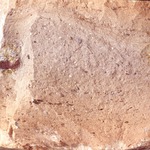
Plate 62: Fresh sherd break of BAT AM 2 (width of field 24 mm)
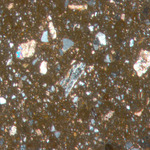
Plate 62.1: Photomicrograph of BAT AM 2 (XPL) (width of field 1.74 mm)
Baetican (Green) amphorae 3 (BAT AM 3)
Single sample
General appearance
This fabric is typically green-cream (2.5Y 7/2) with cream (2.5Y 8/3) surfaces. It is hard with a
hackly fracture and harsh surfaces. It appears to be associated only with the Peacock & Williams
Class 31 form (Dressel 28).
Hand specimen
The sample comprises a slightly silty clay containing common well-sorted inclusions of feldspar,
quartz (some polycrystalline), and mixed red-brown and dark rock fragments, normally ranging 0.3–0.5mm
but occasionally to 1.0mm. Limestone, primarily decomposed and appearing pale orange in colour, occurs in
a similar size and quantity. Sparse accessory minerals are also present.
Thin section
In thin section this sample has an isotropic calcareous clay containing well-sorted subangular medium
to coarse-grade sand, comprising mainly quartz in approximately equal proportions of monocrystalline and
polycrystalline grains. Also present are quartzose rock fragments, with feldspar, schistose and
calcareous rock fragments, chert, green pyroxene and rare amphibole. Rare mica occurs but is not
considered significant.

Plate 63: Fresh sherd break of BAT AM 3 (width of field 24 mm)
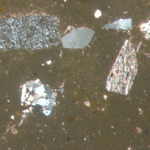
Plate 63.1: Photomicrograph of BAT AM 3 (XPL) (width of field 1.74 mm)
<< Asia Minor (Micaceous) amphorae
::
Cadiz amphorae >>
 SGRP home page