Central Gaulish Colour-Coated and Glazed Fabrics
Two main fabric variants, both producing colour-coated and glazed wares, are included here. One fabric is
generally white and inclusionless (Central Gaulish Colour-coated ware 1, Central Gaulish Glazed ware 1), the
second off-white in colour and micaceous (Central Gaulish Colour-coated ware 2, Central Gaulish Glazed ware
2). These groups may represent two main areas of production and they are described below.
In his work on Usk, Greene (1979, 86–105) distinguished two central Gaulish glazed ware fabrics, both of
which are included here. Numerous kilns are known from the Allier Valley, with sites such as St Rémy most
prominent in the literature, but glazed wares were also produced at Lezoux. Greene divided the glazed wares
into a buff micaceous fabric and a white mica-free one. It is tempting to associate the micaceous fabric with
Lezoux, given the characteristic micaceous clay of samian from this site, although Greene
(ibid, 90) concluded that a one-to-one correspondence could not be made between fabric and production
area. Freestone (1989, 265) has examined a single glazed sherd and noted its similarity to Central Gaulish
Pompeian Red ware 3, which itself has a proposed source in Lezoux, while chemical analysis comparing sherds
of central Gaulish glazed wares found in Britain with glazed wares from further afield clusters the central
Gaulish material together (Hatcher
et al 1994; Symonds & Hatcher 1989). Clearly, detailed fabric analysis on kiln material is
necessary before fabric variations can be assigned to particular areas with confidence.
The central Gaulish colour-coated and glazed wares present a complex problem whose resolution requires a
better understanding of the production sites. Until further information is available it is difficult to
further refine our sourcing and for this reason we present here the two main fabric groupings that can be
discriminated macroscopically.
Museums
National Museum of Wales; City Museum and Art Gallery, Gloucester; Departments of Greek & Roman
Antiquities and Prehistoric & Romano-British Antiquities, The British Museum; Museum of London; Musée
de la Céramique Gallo-Romaine, Lezoux (France); Musée Joseph Déchelette, Roanne (France); Musée des
Antiquités Nationales, Saint-Germain-en-Laye (France)
References
Acta Rei Cretariae Romanae Fautorum, 1995 vol 34
(various papers for glazed
wares)
Bet, P, & Henriques-Raba, C, 1989 Les céramiques à parois fines de Lezoux, SFECAG. Actes du Congrès de Lezoux, 21–9
Darling, M J, 1985 Roman pottery, in Kingsholm. Excavations at Kingsholm Close and other sites with a discussion of the archaeology of the area (H R Hurst), Gloucester Archaeol Rep 1, 55–93
Davies, B J, Richardson, B, & Tomber, R S, 1994 The archaeology of Roman London 5. A dated corpus of early Roman pottery from the City of London, CBA Res Rep 98
Déchelette, J, 1901 L’officine de Saint-Rémy (Allier), et les origines de la poterie sigillée gallo-romaine, Revue Archéologique 38(1) 9e série, 360–94
Déchelette, J, 1904 Les vases céramiques ornés de la Gaule romaine, 2 vols, Paris
Desbat, A, 1986 Céramiques romaines à glaçure plombifère de Lyon et de Vienne, SFECAG. Actes du Congrès de Toulouse, 3–39
Freestone, I C, 1989 The petrology of the pottery from the Iron Age cemetery, in Verulamium. The King Harry Lane site (I M Stead & V Rigby), Engl Heritage Archaeol Rep 12, 264–6
Grataloup, C, 1988 Les céramiques à parois fines. Rue des Farges à Lyon, BAR Int Ser 457
Greene, K, 1978a Imported fine wares in Britain to A.D.250: a guide to identification, in Early fine wares in Roman Britain (eds P Arthur & G D Marsh), BAR 57, 15–30
Greene, K, 1978b Mould-decorated Central Gaulish glazed ware in Britain, in Early fine wares in Roman Britain (eds P Arthur & G D Marsh), BAR 57, 31–60
Greene, K, 1979 Report on the excavations from Usk 1965–1976. The pre-Flavian finewares
Hatcher, H, Kaczmarczyk, A, Scherer, A, & Symonds, R P, 1994 Chemical classification and provenance of some Roman glazed ceramics, American J Archaeol 98, 431–56
Jigan, C, 1988 Les vases à glaçure plombifère trouvés en Normandie: état de la question, SFECAG. Actes du Congrès d’Orange, 189–205
Symonds, R P, & Hatcher, H, 1989 La céramique à glaçure plombifère de l’époque romaine trouvée à Colchester et ailleurs: quelques analyses récentes, SFECAG. Actes du Congrès de Lezoux, 85–92
Vertet, H, 1986 Recherches sur les glaçures plombifères fabriquées dans le centre de la Gaule, SFECAG. Actes du Congrès de Toulouse, 25–32
Central Gaulish (White) Colour-coated ware 1 (CNG CC 1), Central Gaulish (White) Glazed ware 1 (CNG GL 1)
General appearance
Samples are united by a white (10YR 8/1, 7.5YR 8/1–8/2) clay. Typologically a range of colour-coated
beakers, bowls and, less frequently, cups with roughcasting, rouletting and hairpin decoration were
produced. Glazed vessels include flagons, handled bowls, cups and beakers, with moulded and barbotine
decoration (Greene 1978a, 17). A hard fabric, it has a smooth to conchoidal fracture, normally smooth to
the touch, although occasionally rough.
Hand specimen
These fabrics are characterised by a fine clay, typically with a very clean matrix, sometimes dense
and frequently vesicular from ?wedging. Few inclusions are visible, but sparse well-sorted quartz,
red-brown quartz-rich clay pellets and red-brown iron-rich fragments can be identified, normally
<0.4mm. In rare samples silt-sized quartz is common. Although not represented on our samples, where
present roughcasting may comprise either quartz sand or clay pellets. Superficially it is similar to
Cologne Colour-coated ware, although with careful examination the
two are easily distinguished.
Thin section
Two samples were examined and some variability can be seen between them. The fabric is characterised
by its nearly inclusionless matrix, which is isotropic in part. Other inclusions are sparse to rare, but
quartz and ferruginous pellets (<0.25mm) can be identified, as can rare fine mica and heavy minerals.
One sample contains a colourless pyroxene (0.35mm).
Source
A white glazed fabric has been attributed to the Allier Valley (Greene 1978a, 16–17, but see also
Fabric 2 below).
Central Gaulish (White) Colour-coated ware 1 (CNG CC 1)
Five samples
General appearance
Variously coloured matt slipped surfaces, ranging from brown to dark brown (7.5YR 3/1–2.5/1),
black-brown (10YR 3/1, 10YR 3/3) or oranges (2.5YR 4/6, 2.5YR 6/8–5/8) are typical. Where thin, slip
sometimes appears mottled to orange or light-brown (5YR 6/8, 7.5YR 6/6).
Donors
Chichester District Museum; Department of Prehistoric & Romano-British Antiquities, The British
Museum; Museum of London
See the related record on the Atlas of Roman Pottery on the Potsherd website
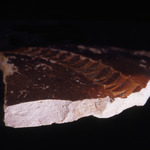
Plate 37: Fresh sherd break of CNG CC 1 (width of field 24 mm)

Plate 37.1: Photomicrograph of CNG CC 1 (XPL) (width of field 1.74 mm)
Central Gaulish (White) Glazed ware 1 (CNG GL 1)
Single sample
General appearance
Apart from the glaze, which is light yellow-green (5Y 8/4–8/6), samples conform to the general
description for the ware as a whole.
Donor
Museum of London
See the related record on the Atlas of Roman Pottery on the Potsherd website

Plate 37.2: Photomicrograph of CNG GL 1 (XPL) (width of field 1.74 mm)
Central Gaulish (Cream) Colour-coated ware 2 (CNG CC 2), Central Gaulish (Cream) Glazed ware 2 (CNG GL 2)
General appearance
Both variants are pale-brown to buff (10YR 7/3, 7.5YR 8/4) in colour, although our colour-coated
sherds are occasionally pale orange (5YR 7/4-7/6). They are hard fired with a smooth fracture. A similar
range of forms was produced here as for
CNG fabric 1.
Hand specimen
The fabric displays a good deal of variation, ranging from well to nearly ill sorted due to the
presence of larger inclusions. In general, it is silty, with common to abundant quartz <0.1mm, in some
samples rarely to 0.6mm, followed by sparse to common red-brown or black iron-rich inclusions
(<0.2mm). More distinctive is fine silver and less gold mica, which is sparse in our colour-coated and
abundant in our glazed ware samples. Sparse white or matrix-coloured clay pellets (0.3–1.0mm) are
sometimes visible. It is distinguished from
CNG CC 1 by the range and size of inclusions, and particularly
the presence of mica.
Thin section
Two samples were examined and are united by containing abundant muscovite and biotite mica in a matrix
with varying quantities of silt-sized quartz and opaques. The colour-coated sherd contains abundant
angular small quartz, while in the glazed sherd they are only common. Rare larger inclusions (<0.2mm)
of quartz, aggregate quartz and feldspar are also present, as are quartz-rich clay pellets (to
1.0mm).
Source
Workshops at Lezoux are known to have produced micaceous colour-coated wares (Greene 1979, 46);
equally, an Allier Valley source has been proposed for a micaceous glazed ware (Greene 1978a, 17). Based
on petrological analysis, Freestone (1989, 264) has allied a micaceous glazed fabric with
Central Gaulish Pompeian Red ware 3 and
Central Gaulish Terra Nigra, for which a Lezoux source is
generally accepted.
Central Gaulish (Cream) Colour-coated ware 2 (CNG CC 2)
Four samples
General appearance
These sherds generally have a dark slip, orange-brown (5YR 3/3), red-brown (2.5YR 6/6–5/6), brown to
brown-black (5YR 2.5/1, 2.5Y 4/1–3/1), sometimes with a slightly purple cast. Where thinner, the slip
appears orange (2.5YR 6/6–6/8, 5YR 6/6) or pink (2.5YR 5/4). Frequently they are slightly rough to the
touch, even where slipped.
Hand specimen
Of the available samples, roughcasting consists of either clay pellets, generally 1.0–2.0mm; or
mixed clay pellets and quartz, where quartz is frequently 0.5mm.
Donors
Chichester District Museum; Department of Prehistoric & Romano-British Antiquities, The British
Museum; Museum of London
See the related record on the Atlas of Roman Pottery on the Potsherd website

Plate 38: Fresh sherd break of CNG CC 2 (width of field 24 mm)

Plate 38.1: Photomicrograph of CNG CC 2 (XPL) (width of field 1.74 mm)
Central Gaulish (Cream) Glazed ware 2 (CNG GL 2)
Two samples
General appearance
Typically sherds have a smooth surface, and where glazed they are green (2.5Y 6/4–5/4) or pale
yellow (2.5Y 6/6) in colour.
Donor
Museum of London
See the related record on the Atlas of Roman Pottery on the Potsherd website
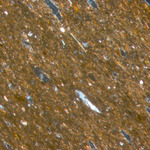
Plate 38.2: Photomicrograph of CNG GL 2 (XPL) (width of field 1.74 mm)
<< Central Gaulish Black-slipped ware
::
Céramique à l'éponge Marbled ware >>
 SGRP home page