Central Gaulish Rhône Valley Fabrics
Two mortarium fabrics which are related in source area, general appearance, and probably overlapping in
date, are included under this umbrella. Our sample of
GLG OX differs somewhat from the standard
CNG OX fabric, but vessels not included in the collection, one of
which was examined in thin section, are virtually identical to CNG OX although still having the calcareous
clay associated with GLG OX. It is likely that they are products of two different workshops active in the
same area.
Central Gaulish (Rhône Valley) Oxidised ware (CNG OX)
Five samples
General appearance
Our samples are typically dull pink or pink-brown (5YR 6/4-7/4, 7.5YR 7/4), often with slightly paler
surfaces. Hartley (pers comm) notes two different colour variants, one which is pink-brown, as our
samples, and a second which is a brown-cream. It is hard, slightly powdery to the touch and has a smooth
fracture through which coarse inclusions protrude. Concentric scoring is visible on the interior from the
trituration grits, but the flange is never deliberately gritted, nor scored, and can be very smooth.The
vessels belong to a restricted form
(eg Hartley 1991a,TC 8–18, figs 78–80), which is never stamped.
Hand specimen
The clay matrix is usually fine, clean and micaceous, containing primarily gold mica. In the fresh
fracture a sparse scatter of quite coarse ill-sorted inclusions, measuring between
c 1.0–2.5mm, is visible: quartz (sometimes angular), angular feldspar (sometimes decomposed),
frequently rounded and both light-coloured and redder rock fragments, and fewer accessory minerals,
rarely to 1.0mm, can all be identified. Of these inclusions, feldspar and light-coloured rocks are the
most distinctive. Silt-sized iron-rich inclusions are also present. Trituration grits present on the
lower part of the vessel bottom are well sorted (to 4.5mm) and, like the break, varying in composition,
consisting of common quartz and feldspar (sometimes decomposed) and sparse rocks. Large
(c 1.0mm) flakes of gold mica are often visible on the interior surface.
Thin section
This sample comprises a clay matrix with low birefringence, containing common flakes of mica, up to
0.06mm, and sparse subangular grains of quartz silt. Sparse subangular granitic rock fragments up to
1.5mm, consisting of quartz and feldspar with or without biotite and disaggregated monomineralic grains
of these minerals, are the main aplastic components.
Source
The petrology of this fabric conforms with the Massif Central region, and this has been proposed as a
likely source area on petrological grounds (Williams 1993, 425). Tyers (1996, 130–1) has compared the
British fabric with one from Vienne, an area of pottery production, and has suggested that the
Vienne/Lyon area could be the source, which would be in keeping with the petrological evidence.
Donors
Bath Archaeological Trust; Museum of London
Museums
Roman Baths Museum, Bath; Royal Albert Memorial Museum, Exeter; City Museum and Art Gallery,
Gloucester; Museum of London
References
Davies, B J, Richardson, B, & Tomber, R S, 1994 The archaeology of Roman London 5. A dated corpus of early Roman pottery from the City of London, CBA Res Rep 98
Hartley, K F, 1985a The mortaria, in Kingsholm. Excavations at Kingsholm Close and other sites with a discussion of the archaeology of the area (H R Hurst), Gloucester Archaeol Rep 1, 55–93
Hartley, K F, 1991a Mortaria, in Roman finds from Exeter (N Holbrook & P T Bidwell), Exeter Archaeol Rep 4, 189–215
Hartley, K F, 1993b Mortaria [from the fortress], in Report on the excavations at Usk 1965–1976. The Roman pottery (ed W H Manning), 68–72
Tyers, P A, 1996 Roman pottery in Britain
Williams, D F, 1993 The petrology of mortarium fabrics 5, 6, 11 and 13, in Report on the excavations at Usk 1965–1976. The Roman pottery (ed W H Manning), 424–5
See the related record on the Atlas of Roman Pottery on the Potsherd website

Plate 49a: Fresh sherd break of CNG OX (width of field 24 mm)

Plate 49b: Trituration grits on CNG OX (width of field 24 mm)
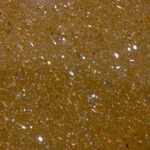
Plate 49.1: Photomicrograph of CNG OX (XPL) (width of field 1.74 mm)

Plate 49.2: Photomicrograph of trituration grits on CNG OX (PPL) (width of field 1.74 mm)
Gallia Lugdunensis Oxidised ware (GLG OX)
Single sample
General appearance
Our example is pale pink-brown (5YR 7/4) with surfaces showing wiping marks. It is soft with a smooth
fracture and a powdery feel. The vessel is distinguished from that produced in
CNG OX, not only in rim form and lack of internal concentric
scoring, but also by being a stamped type.
Hand specimen
This fabric has a sparsely micaceous matrix of fine mica, primarily gold and less silver. The
groundmass contains common fine well-sorted quartz (<0.1mm), and common black and red iron-rich
grains. Set in this matrix is a sparse scatter of much larger angular to rounded quartz grains measuring
1.0–1.5mm. Trituration grits are sparse and normally measure between 2.0–3.0mm, with occasional fragments
between 1.5–4.0mm. Aggregate quartz and red and white rock fragments are all present. No grits are extant
on the remainder of our sherd and therefore no photograph is available here.
Thin section
A variegated calcareous clay matrix, containing common subangular grains of quartz-rich silt is
visible. Fine flakes of mica up to 0.1mm are quite common in some areas of the slide. A few grains of
subangular to subrounded quartzose sand are present, and one of these is a rock fragment composed of
feldspar, quartz and fine aggregates of white mica. These may be included as trituration grits.
Source
Distribution indicates a source in the Lyon/Vienne area, and the type is rare elsewhere.
Donor
Southend-on-Sea Central Museum
Museums
Royal Albert Memorial Museum, Exeter; City Museum and Art Gallery, Gloucester; Southend-on-Sea Central
Museum
References
Bidwell, P T, 1979 The legionary bath-house and basilica and forum at Exeter, Exeter Archaeol Rep 1
Taylor, M V, & Collingwood, R G, 1922 (1924) Roman Britain in 1923, J Roman Stud 12, 261

Plate 50: Fresh sherd break of GLG OX (width of field 24 mm)

Plate 50.1: Photomicrograph of GLG OX (XPL) (width of field 1.74 mm)

Plate 50.2: Photomicrograph of trituration grits on GLG OX (XPL) (width of field 1.74 mm)
<< Aoste, Isère White ware
::
German Coarse Fabrics >>
 SGRP home page