Central Gaulish Samian Fabrics
Although a large degree of variability can be seen amongst the central Gaulish production centres, they
are united by having a micaceous clay. Where present, limestone is frequently coarser than for south Gaulish
products, and the quantity of black and red iron-rich inclusions result in a speckled appearance.
Les Martres-de-Veyre samian (LMV SA)
Seven samples
General appearance
This is a red-brown fabric whose closest value is 10R 6/8, with three samples estimated at 10R 7/8. As
La Graufesenque hues tend to be slightly redder than the 10R card, so Les Martres hues tend to be
slightly yellower with orange-brown, especially orange (10R 5/8), surfaces. The sherds are hard, covered
with a good quality, smooth and highly lustrous slip; the fracture is conchoidal.
Hand specimen
These products have a very dense and well-fired clay matrix. The size and frequency of the limestone
varies, being either common and measuring <0.1mm, or abundant and extending to 0.2mm. In the former
case it is barely visible to the naked eye, in the latter the fabric appears packed with well-sorted,
uniform inclusions. Fine silver (and very occasionally gold) mica is common, while red-brown and black
iron-rich grains (rarely to 0.5mm) are sparse. Elongate voids (or cracks), usually between 0.2–1.0mm but
occasionally reaching 2.0-3.0mm, are particularly characteristic of the Les Martres fabric.
The distinguishing characteristics of Les Martres – particularly when compared to Lezoux – can be
summarised by its compactness, bright orange slip and the longitudinal cracks or voids.
Thin section
An isotropic calcareous clay with sparse brown mica is seen in thin section. Abundant rounded
limestone and rare quartz, feldspar and opaques (<0.1mm) are also present, as are rare larger
inclusions to
c 0.2mm. Voids seen in the hand specimen are also visible here.
Source
Donnaucus, Lentiscus, Medetus, Paterclus, Reginus, Suobnus, Vitalis
Donors
Museum of London
Museums
Museum of London; Musée Bargoin à Clermont-Ferrand (France) (Kuhn, Charvilhat, Lhéritier et Souchon
Collections); Dépôt de fouilles de Lezoux (France); Dépôt de fouilles municipal des Martres-de-Veyre
(France); Musée des Antiquités Nationales de Saint-Germain-en-Laye (France) (part of the Plicque
Collection from Les Martres-de-Veyre, Collection J-R Terrisse)
References
Bémont, C, & Jacob, J-P (eds), 1986 La terre sigillée gallo-romaine. Lieux de production du Haut Empire: implantations, produits, relations, Documents d’Archéologie Française 6, Paris
Martin, J, 1942 L'évolution des vases sigillées de Lezoux, Bulletin Historique et Scientifique de l'Auverge 62
Picon, M, & Vauthey, M, 1975 Les céramique de l'atelier de Terre-Franche. problèmes de composition et problèmes techniques, Revue Archéologique du Centre de la France 14, 55-5, 285-302
Terrisse, J-R, 1968 Les céramiques sigillées gallo-romaines des Martres-de-Veyre (Puy-de-Dôme), Gallia Suppl 19 (reprinted 1972)
See the related record on the Atlas of Roman Pottery on the Potsherd website
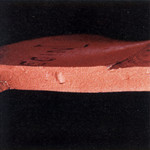
Plate 19: Fresh sherd break of LMV SA (width of field 24 mm)
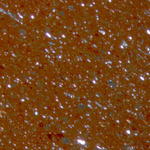
Plate 19.1: Photomicrograph of LMV SA (XPL) (width of field 1.74 mm)
Lezoux (1st century) samian (LEZ SA 1)
Seven samples
The fabric refers to Lezoux products from the 1st century.
General appearance
The variation in colour and composition of this fabric generally polarises into two subgroups. The
first variant (i) is red-brown (2.5YR 6/8) or brown (5YR 6/6) with a red-brown (10R 6/6, 10R 5/8) smooth
and even semi-lustrous slip, while the second (ii, Plate 20)
is pale brown or almost beige (7.5YR 8/2,
7.5YR 7/4) with a patchy, nearly matt, red-brown (10R 6/6, 10R 5/8) slip. Both are hard with an irregular
fracture and a smooth feel.
Hand specimen
Both variants contain common silver and gold mica, although in i) it is <0.1mm and thus difficult
to see with the naked eye, whereas in ii) the flakes are much larger, up to 0.5mm. The fabric contains
generally well-sorted inclusions (<0.1mm); occasionally quartz outweighs the mica, normally it is much
sparser. Other sparse inclusions are brown and red iron-rich grains and unidentified white fragments,
both occasionally to
c 0.6mm.
Thin section
An intensely micaceous matrix can be seen in thin section, with muscovite and brown mica frequently
present to 0.2mm, or occasionally 0.4mm. The clay is silty with common quartz and less feldspar;
occasional but regular grains measure to between 0.1–0.2mm. Sparse opaques and rare chert are also
present in a similar size range.
Source
Atepomarus
Donors
Department of Prehistoric & Romano-British Antiquities, The British Museum; Musée de la Céramique
Gallo-Romaine, Lezoux (France)
Museums
University of Durham (Oswald-Plicque Collection); Department of Prehistoric & Romano-British
Antiquities, The British Museum; University of Nottingham (Oswald-Plicque Collection); Musée de
Clermand-Ferrand (France); Dépôt de fouilles de Lezoux (France); Musée de la Céramique Gallo-Romaine,
Lezoux (France); Musée Joseph Déchelette, Roanne (France); Musée des Antiquités Nationales,
Saint-Germain-en-Laye (France) (Collection Plicque); Museum of Utrecht (The Netherlands)
References
Bémont, C, & Jacob, J-P (eds), 1986 La terre sigillée gallo-romaine. Lieux de production du Haut Empire: implantations, produits, relations, Documents d’Archéologie Française 6, Paris
Martin, J, 1942 L'évolution des vases sigillées de Lezoux, Bulletin Historique et Scientifique de l'Auverge 62
Vertet, H, 1962 Les vases caliciformes de Roanne et la chronologie de la terre sigillée de Lezoux au début de 1er siècle, Gallia 20, 350–80
Vertet, H, 1967 La céramique sigillée tibérienne à Lezoux, Revue Archéologique, 255–93
See the related record on the Atlas of Roman Pottery on the Potsherd website
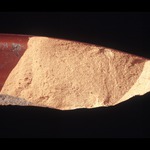
Plate 20: Fresh sherd break of LEZ SA 1 (width of field 24 mm)

Plate 20.1: Photomicrograph of LEZ SA 1 (XPL) (width of field 1.74 mm)
Lezoux samian 2 (LEZ SA 2)
Seven samples
This group refers to 2nd century products from Lezoux.
General appearance
This fabric is red-brown (10R 6/8, 10R 5/6) or paler (estimated to a value of 8), with surfaces
red-brown (10R 5/8) or orange-brown (2.5YR 5/8), but browner than, for example, those seen from
La Graufesenque.
The slip is smooth and lustrous, but less so than La Graufesenque. It is a hard fabric with
a conchoidal fracture. Later in the 2nd century (BM registration no. P1995.7-12.6) the fabric is
generally paler (10R 8/8) with a slightly browner slip.
Hand specimen
The inclusion suite is more mixed than for the
south Gaulish
centres, and on the whole ill sorted.
Plate 21, of early Antonine date, is considered a typical Lezoux product. Limestone, silver (with less
gold) mica and red-brown and black iron-rich grains are all common, and generally <0.1mm, although
limestone and iron-rich grains occur up to 1.0mm. Quartz is sparse, normally measuring
c 0.2mm. The Hadrianic fabric (BM registration no. P1995.7-12.5) tends to be denser, with fewer
inclusions.
Thin section
An isotropic and calcareous clay is visible. It contains abundant, frequently rounded, limestone and
less quartz and opaques, all generally <0.1mm. Regular larger inclusions of quartz, feldspar and
limestone measure between
c 0.1–0.2mm. The matrix is micaceous, with common muscovite and some brown mica, measuring to
c 0.6mm. Additional inclusions, always rare, comprise ferromagnesian minerals and siltstone.
Source
Atilianus, Attius, Lollius, Luppa, Maior, Namilianus, Pugnus
Donor
Museum of London
Museums
University of Durham (Oswald-Plicque Collection); Department of Prehistoric & Romano-British
Antiquities, The British Museum; Museum of London; Musée de la Céramique Gallo-Romaine, Lezoux (France);
Musée des Antiquités Nationales, Saint-Germain-en-Laye, (France) (Collection Plicque)
References
Bémont, C, & Jacob, J-P (eds), 1986 La terre sigillée gallo-romaine. Lieux de production du Haut Empire: implantations, produits, relations, Documents d’Archéologie Française 6, Paris
Bet, P, Fenet, A, & Montineri, D, 1989 La typologie de la sigillée lisse de Lezoux: considérations générales et formes inédites, SFECAG. Actes du Congrès de Lezoux, 37–54
Oswald, F, 1936–7 Index of figure-types on terra sigillata (‘samian ware’)
Oswald, F, & Pryce, T Davies, 1920 Introduction to the study of terra sigillata
Picon, M, 1973 Introduction à l’étude technique des céramiques sigillées de Lezoux, Centre de Recherche sur les Techniques Gallo-Romaines 2, Dijon
Rogers, G, 1975 Poteries sigillées de la Gaule centrale. 1. Les motifs non figurés, Gallia Supplément 28
Stanfield, J A, & Simpson, G, 1958 Central Gaulish potters
Stanfield, J A, & Simpson, G, 1990 Les potiers de la Gaule centrale, Revue Archéologiques Sites, Gonfaron
Webster, P V, with contributions by Dannell, G B, 1996 Roman samian pottery in Britain, Practical handbook in archaeology 13
See the related record on the Atlas of Roman Pottery on the Potsherd website
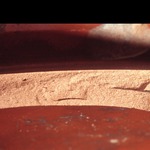
Plate 21: Fresh sherd break of LEZ SA 2 (width of field 24 mm)

Plate 21.1: Photomicrograph of LEZ SA 2 (XPL) (width of field 1.74 mm)
<< South Gaulish Samian Fabrics
::
East Gaulish Samian Fabrics >>
 SGRP home page