Rhodian Fabrics
Two fabrics, both attributed to Rhodes and produced as the peaked-handled Peacock & Williams Class 9
(Camulodunum 184) form, are represented here and are components of an extensive industry dating from the 4th
century BC to the 2nd century AD. The distinction between the two fabrics can often be less clear than in the
extreme ends of the spectrum represented by our samples.
Source
These two fabrics are united by the presence of serpentine, which indicates a source on the isle of
Rhodes or elsewhere in the Rhodian Peraea (Peacock 1977c, 266–70). Our fabric 1 is most like Peacock’s
fabric 1 in colour, although they probably do not share an exact source as it may lack the limestone
normally associated with this variant. The second, yellow, fabric equates to Peacock’s
(ibid) fabric 2.
Museums
Royal Albert Memorial Museum, Exeter; Department of Greek & Roman Antiquities, The British Museum
(for pre-Roman vessels); Museum of London
References
Empereur, J-Y, & Tuna, N, 1989 Hiérotélès, potier Rhodien de la Pérée, Bulletin de Correspondance Hellénique 113, 277–99
Hesnard, E , 1986 Imitations et raisonnement archéolgique: à propos des amphores de Rhodes et de Cos, in Recherches sur les amphores grecques, Bulletin de Correspondance Hellénique Supplément 13, 69–79
Peacock, D P S, 1971 Roman amphorae in pre-Roman Britain, in The Iron Age and its hill-forts. Papers presented to Sir Mortimer Wheeler on the occasion of his eightieth year (eds M Jesson & D Hill), 161–88
Peacock, D P S, 1977c Roman amphorae: typology, fabric and origins, in Méthodes classiques et méthodes formelles dans l’étude des amphores, Collection de l’Ecole Française de Rome 32, 261–78, Rome
Sealey, P R, 1985 Amphoras from the 1970 excavations at Colchester Sheepen, BAR 142
Rhodian (Pink) amphorae 1 (RHO AM 1)
Single sample
General appearance
Our sherd is pale orange (5YR 7/6), although it is more frequently described as pink (cf Peacock
1977c, 266 who cites the same Munsell value). It has a heavily abraded and therefore soft, powdery
surface; unabraded examples have a pale slip on the outside surface. The fracture is irregular.
Hand specimen
The fabric comprises ill-sorted common subrounded to rounded white inclusions (not reacting to dilute
hydrochloric acid), normally 0.2–0.5mm, but occasionally as large as 1.5mm. Apart from these, the fabric
is dominated by common subrounded and rounded red and red-brown fragments (not visible on Plate 87),
measuring 0.1–0.4mm. Finally, sparse quartz (0.2–0.4mm) and black iron-rich inclusions (<0.1mm) are
present in the clay.
Thin section
Abundant subangular inclusions, from silt grade up to 0.5mm, and comprising mainly serpentine, with
minor quartz, rare chert and feldspar occur. Voids, which may have contained calcareous matter, can also
be seen.
Donor
Department of Prehistoric & Romano-British Antiquities, The British Museum
See the related record on the Atlas of Roman Pottery on the Potsherd website
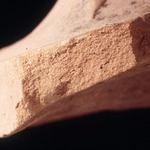
Plate 87: Fresh sherd break of RHO AM 1 (width of field 24 mm)

Plate 87.1: Photomicrograph of RHO AM 1 (XPL) (width of field 1.74 mm)
Rhodian (Yellow) amphorae 2 (RHO AM 2)
Two samples
General appearance
This type is characterised by its pale brown (10YR 8/4) clay with pale yellow (2.5Y 8/4) surfaces.
Both our sherds are hard with abraded powdery surfaces and irregular fracture.
Hand specimen
The fabric is dominated by common well- or ill-sorted subrounded or occasionally angular red-brown
inclusions, ranging from <0.1–1.2mm but normally not exceeding 0.5mm. Ill-sorted limestone and fine
quartz (<0.2mm) vary in quantity between common and sparse. Limestone (0.2–1.0mm) is sometimes very
well rounded and erupts on the surface.
Thin section
An isotropic calcareous clay containing common subangular inclusions of orange to red serpentine and
subordinate quartz up to 0.2mm is visible. Rounded voids up to 0.6mm are common in this sample; angular
grains of chert up to 0.6mm are rare. Sparse to rare silt-grade materials include feldspar, mica (pale
coloured and slightly pleochroic), amphibole and opaque iron oxides.
Donor
Museum of London
See the related record on the Atlas of Roman Pottery on the Potsherd website
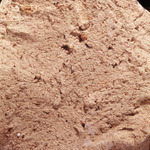
Plate 88: Fresh sherd break of RHO AM 2 (width of field 24 mm)
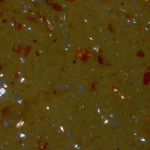
Plate 88.1: Photomicrograph of RHO AM 2 (XPL) (width of field 1.74 mm)

Plate 88.2: Photomicrograph of RHO AM 2 (PPL) (width of field 1.74 mm)
<< Peacock & Williams No 66 amphorae
::
Next section: Romano-British Wares >>
 SGRP home page