South Gaulish Samian Fabrics
These centres are united by their high proportion of finely sorted limestone, in conjunction with a good
quality red or red-brown slip. Although marbled samian was produced in south Gaul, none is represented
here.
La Graufesenque samian (LGF SA)
Ten samples
General appearance
In colour these products are pale pink-brown: the closest Munsell value is 10R 6/8, with 6/6, 5/6 and
5/8 less frequently recorded; if anything the hue of the La Graufesenque fabric tends to be slightly
redder than the Munsell 10R card. The surfaces are red-brown (10R 5/8) with an even, often highly
lustrous slip. Samples are hard with a smooth fracture and feel.
Hand specimen
This fabric contains abundant limestone, normally <0.1mm and not readily visible on
Plate 17, but occasionally up to 0.5mm, and sparse
fine silver mica. Elongate voids, to 2.0mm, are sparse but distinctive to the fabric. Generally the
inclusions are well sorted.
Thin section
The clay is isotropic, with a fine groundmass containing rare silt and abundant rounded limestone
(<0.15mm), together with sparse muscovite mica. The voids seen macroscopically are also identifiable
in thin section, as are silt-sized opaques.
Source
Albus, Calvus, Carantus, Iucundus, Maccarus, Masc(u)lus, Mercator, Modestus, Peregrinus
Donor
Museum of London
Museums
Department of Prehistoric & Romano-British Antiquities, The British Museum; Museum of London;
Dépôt de Fouilles de la Graufesenque, Millau (France); Musée Municipal de Millau (France); Musée des
Antiquités Nationales de Saint-Germain-en-Laye (France)
References
Bémont, C, & Jacob, J-P (eds), 1986 La terre sigillée gallo-romaine. Lieux de production du Haut Empire: implantations, produits, relations, Documents d’Archéologie Française 6, Paris
Dickinson, B M, & Hartley, B R, 1993 Samian ware, Roman pottery from the fortress: 9 Blake Street (J Monaghan), The Archaeology of York. The Pottery 16/7, 722–5
Hawkes, C F C, & Hull, M R, 1947 Camulodunum. First report on the excavations at Colchester 1930–1939, Rep Res Comm Soc Antiq London 14
Hermet, F, 1934 La Graufesenque (Condatomago): vases sigillés, graffites, Paris
Hull, M R, 1958 Roman Colchester, Rep Res Comm Soc Antiq London 20, 153 (1st pottery shop), 198 (2nd pottery shop)
Hull, M R, 1963 The Roman potters’ kilns of Colchester, Rep Res Comm Soc Antiq London 21
Knorr, R, 1919 Töpfer und Fabriken verzierter Terra Sigillata des ersten Jahrhunderts, Stuttgart
Knorr, R, 1952 Terra Sigillata Gefässe des ersten Jahrhunderts mit Töpfernamen, Stuttgart
Vernhet, A, 1979 La Graufesenque. Atelier de céramiques gallo-romain, Toulouse
See the related record on the Atlas of Roman Pottery on the Potsherd website

Plate 17: Fresh sherd break of LGF SA (width of field 24 mm)
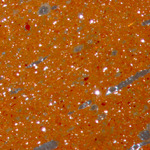
Plate 17.1: Photomicrograph of LGF SA (XPL) (width of field 1.74 mm)
Montans samian (MON SA)
Five samples
Like most British examples, all the samples included here are 2nd century in date.
General appearance
This is often a very pale red-brown (nearest value 10R 6/8, estimated value 10R 8/8–7/8) fabric.
Surfaces are red-brown (10R 5/8–4/8) with a smooth lustrous slip. It is hard with a smooth fracture and
feel. The 1st century Montans fabric is generally paler than La Graufesenque, with browner gloss, and
therefore more similar to Lezoux.
Hand specimen
The fabric is dominated, even more so than
La Graufesenque, by abundant well-sorted limestone,
<0.1mm, occasionally to 0.4mm. All other inclusions are sparse, with only one grain of quartz seen in
five samples. Red-brown iron-rich grains (occasionally to 0.3mm), fine silver mica and voids (to 1.0mm)
are also identified.
Thin section
An isotropic calcareous clay is visible, with limestone accounting for approximately half of the
groundmass on part of the sample. Muscovite and brown mica can be identified, as can sparse quartz,
opaques, limestone (sometimes as voids with reaction rims), clean clay pellets and feldspar, all of which
measure between 0.1–0.3mm.
Source
Chresimus (x2), Felicio, Q.V-C- (x2)
Donor
Museum of London
Museums
Museum of London; Musée Toulouse-Lautrec d’Albi (France) (Collection Lacroix); Musée Raymond-Lafage de
Lisle-sur-Tarn (France) (Collection Lacroix); Dépôt de fouilles de Montans (France); Musée Saint-Raymond
de Toulouse (France) (Collection Rossignol)
References
Bémont, C, & Jacob, J-P (eds), 1986 La terre sigillée gallo-romaine. Lieux de production du Haut Empire: implantations, produits, relations, Documents d’Archéologie Française 6, Paris
Simpson, G, 1976 Decorated terra sigillata at Montans (Tarn) from the manuscript of Elie Rossignol at Albi, Britannia 7, 244–73
See the related record on the Atlas of Roman Pottery on the Potsherd website

Plate 18: Fresh sherd break of MON SA (width of field 24 mm)

Plate 18.1: Photomicrograph of MON SA (XPL) (width of field 1.74 mm)
<< Italian and Italian-style sigillata
::
Central Gaulish Samian Fabrics >>
 SGRP home page