Colchester Fabrics
A wide variety of ware and fabric types were produced at Colchester, and black-burnished ware,
colour-coated, samian and white wares are included here, while mica-dusted and Pompeian Red ware are
not.
Source
All the fabric types presented here have known associations with excavated kilns from Colchester (Hull
1963).
Donors
Colchester Museums; Museum of London (COL WH only)
Museum
Colchester Museums
References
Going, C J, 1987 The mansio and other sites in the south-east sector of Caesaromagus: the Roman pottery, CBA Res Rep 62/Chelmsford Archaeol Trust Rep 3.2
Hull, M R, 1963 The Roman potters’ kilns of Colchester, Rep Res Comm Soc Antiq London 21
Symonds, R P, & Wade, S, 1999 Roman pottery from excavations in Colchester, Colchester Archaeol Rep 10
Colchester Black-burnished ware 2 (COL BB 2)
Eight samples
General appearance
Typically this fabric is dark grey (4/0) or brown (7.5YR 4/2, 2.5YR 3/4), less often completely
black, and sometimes with a core in a contrasting shade of (paler) grey or red-brown (6/0, 2.5YR 3/4).
Surfaces are dark grey or black and burnished: in the best examples they are smooth, even and
semi-lustrous, while some sherds have a slip that can be described as ‘silky’ (Williams 1977, 196). The
colour on the burnished surface appears semi-transparent rather than deeply saturated, as in examples
of the
Cooling fabric. Sherds are hard with an irregular fracture and
a smooth feel. While the normal BB2 repertoire is present, plain- or slightly bead-rim dishes with wavy
burnished lines, and folded beakers are both distinctive to Colchester (R Symonds, pers comm). Williams
(ibid) also considers the following traits specific to Colchester in contrast to other centres:
cooking pot rims tend to be thinner; down-turned rims and rolled-rims on bowls and dishes tend to be
smaller and less thick proportionately to the vessel wall; the decoration is particularly
competent.
Hand specimen
The inclusions in this fabric are ill sorted, with grains up to
c 0.7mm. Quartz dominates, usually as abundant and measuring <0.1–0.3mm. All other
inclusions are sparse: black iron-rich grains
(c 0.3mm), silver mica (<0.2mm) and, less frequently, red-brown clay pellets
(c 0.6mm).
Thin section
This sample contains well-sorted inclusions of common quartz in a sparsely micaceous (muscovite)
matrix. Quartz occurs as both a silt grade and slightly larger groundmass (<0.2mm) and as larger,
frequently rounded, grains between 0.3–0.55mm. Although quartz predominates, a variety of inclusions
can be identified in the larger size range: polycrystalline quartz and flint are common; feldspar and
clay pellets (to 1.5mm) sparse; opaques and, less frequently, glauconitic pellets are typical. The
smaller sized quartz is less common here than for BB2 from
Cooling or
Cliffe. Profiles from heavy mineral analysis are available
from sherds thought to have been produced at Colchester (Williams 1977).
References
Williams, D F, 1977 The Romano-British black-burnished industry: an essay on characterization by heavy mineral analysis, in Pottery and early commerce. Characterization and trade in Roman and later Ceramics (ed D P S Peacock), 163–220
See the related record on the Atlas of Roman Pottery on the Potsherd website
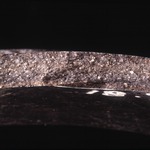
Plate 104: Fresh sherd break of COL BB 2 (width of field 24 mm)

Plate 104.1: Photomicrograph of COL BB 2 (XPL) (width of field 1.74 mm)
 SGRP home page