Crambeck Fabrics
Four basic fabrics were utilised by the Crambeck industry, and three of them – parchment, white and
reduced wares, are widespread in the north of England and are represented in the reference collection. The
fourth fabric, an oxidised one, was confined to a limited range of forms, seemingly with a more restricted
distribution than the others and therefore not included here. The Reduced ware was used for a range of
bowls and dishes, but not for mortaria, while what is here defined as White ware was probably used
exclusively for mortaria. Finally, the Parchment ware was used for a range of bowls, dishes and mortaria.
The White ware can be regarded as a coarser, unpainted version of the Parchment ware, as presented in
Evans’ (1989, 54–5) schema.
Hand specimen
All the Crambeck fabrics are united by a fine clay matrix with sparse silver mica containing varying
quantities of quartz and iron-rich inclusions, while the mortaria have slag trituration grits.
Thin section
Under the polarising microscope, all the Crambeck samples share a fine (<0.1mm) matrix containing
common to abundant angular quartz, rare polycrystalline quartz and feldspar, and common to rare opaques.
Muscovite mica is present in variable quantities in all samples. Larger inclusions vary somewhat between
the different surfaces and are described below. Abundant slag trituration grits measure
c 1.0-3.0mm.
Source
Production is attested to at Crambeck where four kilns have been excavated (Evans 1989).
Donor
York Archaeological Trust
Museums
Corbridge Roman Site Museum; Malton Museum; Scunthorpe Museum and Art Gallery; Yorkshire Museum,
York
References
Corder, P, 1928 The Roman pottery at Crambeck, Castle Howard, Roman Malton and District Report 1
Corder, P, 1937 A pair of fourth century Romano-British pottery kilns near Crambeck, Antiq J 17, 392–413
Evans, J, 1986 Aspects of later Roman pottery assemblages in northern England, Unpublished PhD, University of Bradford
Evans, J, 1989 Crambeck; the development of a major northern pottery industry, in The Crambeck Roman pottery industry (ed P R Wilson), 43–90
Hartley, K F, 1985e Mortaria, in The Roman fort of Vindolanda at Chesterholm, Northumberland (P T Bidwell), 182, 184 and microfiche
Hartley, K F, 1995b Mortaria, in Excavations at York Minster 1 (D Phillips & B Heywood), 304–23
Monaghan, J, 1997 Roman pottery from York, Archaeology of York. The Pottery 16/8
Crambeck Parchment ware (CRA PA)
Three samples
General appearance
The fabric is off-white or cream-yellow (2.5Y 8/2, 10YR 8/3), sometimes with a slip of the same
colour or slightly yellower (7.5YR 7/6) applied to parts of the external surface. Where slipped, the
surfaces are wiped and burnished and any painted decoration, on both internal and external surfaces, is
red-brown (10R 5/8) in colour. It is a hard fabric – sometimes referred to as nearly a ‘stoneware’ –
with smooth fracture and smooth feel.
Hand specimen
This variant is generally very fine with few visible inclusions. One sample contains common
well-sorted larger quartz (<0.2mm), while red or orange iron-rich inclusions can be seen in varying
quantities from absent to sparse, sometimes ill sorted and measuring up to 0.5mm. Trituration grits on
the mortaria are abundant, densely-packed and well-sorted slag – normally black but occasionally
red-brown – averaging 2.0–4.0mm, but ranging between 1.5–5.5mm.
Thin section
Two samples in this group were examined. They conform to the general description with common fine
quartz inclusions: in one sample rare quartz, including polycrystalline (to
c 0.25mm), and clay pellets, normally quartz rich but sometimes quartz free and isotropic (to
c 0.4mm), are also present. Rare redeposited carbonatre is also present.
See the related record on the Atlas of Roman Pottery on the Potsherd website
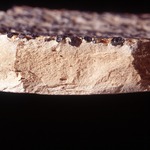
Plate 164a: Fresh sherd break of CRA PA (width of field 24 mm)

Plate 164b: Trituration grits on CRA PA (width of field 24 mm)
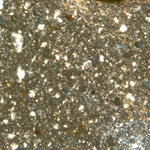
Plate 164.1: Photomicrograph of CRA PA (XPL) (width of field 1.74 mm)

Plate 164.2: Photomicrograph of trituration grits on CRA PA (XPL) (width of field 1.74 mm)
 SGRP home page