Gallia-Belgica Reduced ware (GAB RE)
Single sample
General appearance
This is a hard pale grey (7/0) fabric with darker surfaces, mottled in part to white but generally grey
to dark grey (4/0–3/0) with dark grey (4/0) external margins. The fracture is hackly and surfaces are
smooth.
Hand specimen
The fabric is characterised by abundant well-sorted quartz, normally 0.2–0.4mm, but ranging between
<0.1–0.6mm, set in a fairly clean clay matrix. Sparse black iron-rich fragments in the same size range
as the quartz are the only other visible inclusion. The type is similar in both fabric and general
appearance to a reduced type of Verulamium Region ware found in London during the early Roman period
(Davies
et al 1994, 52), but the significance of this is unclear.
Thin section
In thin section the clay matrix is clean but slightly silty. Abundant well-sorted, frequently rounded,
quartz in the size ranges outlined above occurs, with occasional grains to
c 0.6mm. Polycrystalline quartz is common, with sparse chert/flint, quartzite, opaques and
feldspar, and rare fine-grained sandstone.
Source
At present no source is suggested for the type, although it may be imported (V Rigby, pers comm).
Museums
Verulamium Museum, St Albans
References
Davies, B J, Richardson, B, & Tomber, R S, 1994 The archaeology of Roman London 5. A dated corpus of early Roman pottery from the City of London, CBA Res Rep 98
Rigby, V, 1989a Pottery from the Iron Age cemetery, in Verulamium. The King Harry Lane site (I M Stead & V Rigby), Engl Heritage Archaeol Rep 12, 112–210

Plate 4: Fresh sherd break of GAB RE (width of field 24 mm)
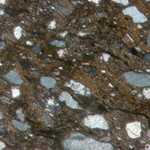
Plate 4.1: Photomicrograph of GAB RE (XPL) (width of field 1.74 mm)
<< Gallia-Belgica Craquelée Bleutée
::
Gallia-Belgica (Vesle Valley) Terra Nigra 1 >>
 SGRP home page