Gallia-Belgica Terra Rubra 2 (GAB TR 2)
Single sample
General appearance
Our sample is red-brown (10R 5/8) with well-polished silky slipped surfaces, either slightly lighter
(10R 5/6) or of the same colour as the matrix. Both cups and platters, normally stamped, were made in GAB
TR 2. Our sherd is hard with an irregular fracture.
Hand specimen
The fabric is similar to GAB TR 1C.
Our sample contains common well-sorted quartz and less feldspar,
normally 0.1–0.3mm, rarely to 0.5mm, in a slightly silty matrix.
Thin section
This sample is similar in texture to GAB TR 1B and
1C,
although the clay has low birefringence in
part. The matrix contains common quartz belonging to silt grade and common ill-sorted grains (angular to
subrounded) measuring between
c 0.1–0.2mm, occasionally to 0.5mm. Opaques, in a similar size range, are also common, with
chert, polycrystalline quartz, feldspar and quartzite ranging from sparse to rare. Muscovite mica is
common in part of the slide.
Source
This fabric probably shares a source with GAB TR 1C
in the Marne-Vesle Valley (Rigby 1989s, 126).
Museums
Royal Museum and Art Gallery, Canterbury (Tiberio-Claudian forms and fabrics); Colchester Museums;
Chichester District Museum (Tiberio-Claudian forms and fabrics); Ipswich Museum; Department of
Prehistoric & Romano-British Antiquities, The British Museum
References
Holwerda, J H, 1941 De Belgische Waar in Nijmegen, Beschrijuing van de verzameling van het Museum G M Kam te Nijmegen 2, Nijmegen
(Tiberio-Claudian forms and
fabrics)
Rigby, V, 1989a Pottery from the Iron Age cemetery, in Verulamium. The King Harry Lane site (I M Stead & V Rigby), Engl Heritage Archaeol Rep 12, 112–210
(Tiberio-Claudian forms and
fabrics)
See the related record on the Atlas of Roman Pottery on the Potsherd website
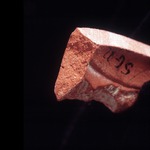
Plate 10: Fresh sherd break of GAB TR 2 (width of field 24 mm)
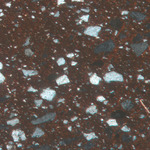
Plate 10.1: Photomicrograph of GAB TR 2 (XPL) (width of field 1.74 mm)
 SGRP home page