Gazan amphorae (GAZ AM)
Three samples
This fabric occurs from the 1st–7th centuries, during which it exhibits extensive typological development,
including Peacock & Williams Classes 48–9 (Majcherek 1995).
General appearance
The most characteristic feature of this fabric is its colour, which is a drab brown, sometimes orange
(5YR 5/6) in tone. Samples housed here occasionally have lighter surfaces (5YR 6/6), but this is probably
discolouration due to salt leaching from the soil. In its later stages of development, another
distinguishing feature of this crudely made amphora is clay accretions trailed on the neck and shoulder,
making the surface harsh, although elsewhere it may be rough. A hard fabric, the fracture varies from
irregular to hackly, depending on the quantity of quartz.
Hand specimen
This is a variable fabric with a silty matrix, containing well- to ill-sorted abundant quartz and sparse
to common limestone, which is frequently grey in colour. In general, inclusions range between 0.2–0.5mm,
although examples up to 2.0mm can be identified. Small black or red-brown inclusions (primarily iron-rich
fragments, but some may be ferromagnesian accessory minerals, <0.2mm) are normally sparse, but can be
more common than limestone. In the coarser sherds, clay pellets resulting from poorly mixed clay are
visible, while sparse shell can occasionally be identified.
Thin section
Our sample exhibits a well-sorted groundmass of abundant angular quartz and limestone (rarely
fossiliferous) measuring
c 0.05mm, together with common ill-sorted larger and more rounded grains, normally
c 0.2–0.4mm and occasionally up to 1.0mm. There is also a sparse scatter of silt-sized
ferromagnesian accessory minerals and rare feldspar. Opaques also occur, generally in the silt grade.
Source
Gaza has long been proposed on distributional and petrological grounds, and the discovery of a series of
kiln sites has recently confirmed this (J Humphrey and J Riley, pers comm).
Donor
Center for Maritime Studies, University of Haifa (Israel)
Museums
None
References
Darling, M J, 1993 The Roman pottery, in Caister-on-Sea: excavations by Charles Green 1951–1955 (M Darling with D Gurney) East Anglian Archaeol 60, 153–218
Majcherek, G, 1995 Gaza amphorae: typology reconsidered, in Hellenistic and Roman Pottery in the Eastern Mediterranean – Advances in Scientific Studies. Acts of the IInd Nieborów Pottery Workshop (eds H Meyza & J Młynarczyk), 163–78, Warsaw
Riley, J A, 1979 The coarse pottery from Benghazi, in Sidi Khrebish Excavations, Benghazi (Berenice) 2 (ed J A Lloyd), 91–497, Tripoli
Riley, J A, 1981 The pottery from cisterns 1977.1, 1977.2 and 1977.3, in Excavations at Carthage 1977 conducted by the University of Michigan 6 (ed J H Humphrey), 85–124, Ann Arbor
Thomas, C, 1981 A provisional list of imported pottery in post-Roman western Britain and Ireland
Tomber, R S, & Williams, D F, 1986 Late Roman amphorae in Britain, J Roman Pottery Stud 1, 42–54
Zemer, A, 1978 Storage jars in ancient sea trade, Haifa
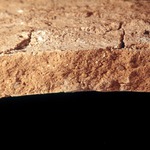
Plate 71: Fresh sherd break of GAZ AM (width of field 24 mm)

Plate 71.1: Photomicrograph of GAZ AM (XPL) (width of field 1.74 mm)
<< Gaulish Fabrics
::
Italian amphorae 1 >>
 SGRP home page