Italian amphorae 1 (ITA AM 1)
Two samples
This category provides an example of one of the many fabrics found in Britain that was used to produce
Peacock & Williams Class 3 (Dressel 1A) amphorae.
General appearance
Our samples are brown-pink (2.5YR 6/6) with pale orange (5YR 7/6–6/6) surfaces. The fabric is very hard
with an irregular fracture and rough surfaces.
Hand specimen
The fabric is composed of a sparsely micaceous clay (fine gold and silver) dominated by abundant
well-sorted feldspar/quartz (<0.5mm). Less frequent, but more diagnostic, are ill-sorted sparse to
common accessory minerals (0.2–0.5mm) and sparse fine-grained red-brown and black rock fragments
(0.3–1.0mm). One sample contains small (<0.4mm) inclusions in the same colours as the rock fragments
which may be either rocks or iron-rich fragments.
Thin section
Both samples were examined in thin section and while slightly different they could well derive from a
similar source area. They are united by a partly isotropic clay containing common subangular silt to fine or
medium sand, composed of quartz and sanidine feldspar, with clinopyroxene, lava and mica (usually but not
always colourless). Individual samples are distinguished by containing rare plagioclase and altered
volcanic glass fragments.
Rare limestone inclusions are also present.
Source
Although different in some respects, this fabric is most like Peacock’s (1971, 164) fabric 1, which may
derive from a wide volcanic tract in Italy including Campania, Latium and Etruria (Peacock & Williams
1986, 87), thus allowing for variants within the fabric type.
Donor
Department of Prehistoric & Romano-British Antiquities, The British Museum
Museums
(for Peacock & Williams Classes 3–5 fabrics in general) Red House Museum and Gardens, Christchurch;
Colchester Museums; Departments of Greek & Roman Antiquities and Prehistoric & Romano-British
Antiquities, The British Museum
References
Fitzpatrick, A, 1985 The distribution of Dressel 1 amphorae in north-west Europe, Oxford J Archaeol 4, 305–40
Peacock, D P S, 1971 Roman amphorae in pre-Roman Britain, in The Iron Age and its hill-forts. Papers presented to Sir Mortimer Wheeler on the occasion of his eightieth year (eds M Jesson & D Hill), 161–88
Sealey, P R, 1985 Amphoras from the 1970 excavations at Colchester Sheepen, BAR 142
Stead, I M, 1967 A La Tène III burial at Welwyn Garden City, Archaeologia 101, 1–62
Tchernia, A, 1988 Le vin de l’Italie romaine: essai d’histoire économique d’après les amphores, Rome
Williams, D F, 1987b Amphorae, in The prehistoric and Roman settlement, 3500 BC–AD 500 (B Cunliffe), Hengistbury Head 1, 271–5
See the related record on the Atlas of Roman Pottery on the Potsherd website
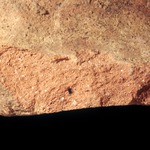
Plate 72: Fresh sherd break of ITA AM 1 (width of field 24 mm)

Plate 72.1: Photomicrograph of ITA AM 1 (XPL) (width of field 1.74 mm)

Plate 72.2: Photomicrograph of ITA AM 1 (XPL) (width of field 1.74 mm)
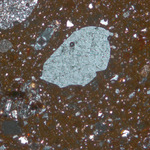
Plate 72.3: Photomicrograph of ITA AM 1 (XPL) (width of field 1.74 mm)
<< Gazan amphorae
::
?Italian (Feldspathic) amphorae 2 >>
 SGRP home page