Lower Rhineland Marbled ware (LOR MA)
Two samples
General appearance
In colour this fabric is brown (5YR 6/4) or brown-pink (10R 7/6) with orange-brown (2.5YR 6/6) slipped
surfaces and ephemeral marbling in a slightly duller tone (2.5YR 5/6). The fabric is hard with a smooth
fracture and feel. Flagons and jugs are the most popular forms in Britain.
Hand specimen
Our sherds contain abundant well-sorted quartz (0.1–0.2mm, occasionally to 0.5mm) set in a sparsely
micaceous matrix with fine silver and gold mica. Other inclusions are sparse but red metamorphic grains
(0.2–0.9mm), feldspar
(c 0.5mm), accessory minerals (0.3–0.5mm) and occasional matrix-coloured clay pellets (1.0–2.5mm)
are present. The fabric differs from other marbled wares in this collection by the relatively coarse
inclusion size.
Thin section
This sample contains common ill-sorted fine to medium-grade sand, composed predominantly of quartz with
minor feldspar, rare chert and rare quartz-mica rock fragments, up to 1.5mm. A single large grain of
phyllite is present in the section examined, as are rare grains of ?augite. Our sherd shares traits with
that described by Bird and Williams (1983, 247), and a similar source area is likely. Only rare mica was
visible in section and not considered significant.
Source
Most British examples belong to the type of marbled ware described as ‘mamorierte keramik’ whose
distribution indicates a source on the Rhine or lower Mosel. The petrology further isolates the
Eifel-Rhenish area of Germany as a probable source area (Bird & Williams 1983).
Donor
Canterbury Museums
Museums
Canterbury Museums; Department of Greek and Roman Antiquities, The British Museum
References
Bird, J, & Williams, D F, 1983 German marbled flagons in Roman Britain, Britannia 14, 247–52
Gose, E, 1976 Gefässtypen der römischen Keramik im Rheinland, Cologne (2nd ed)
Green, M J, 1995 The period 4 fine wares, in Excavations in the Marlowe Car Park and surrounding areas. Part 2: the finds (K Blockley, M Blockley, P Blockley, S S Frere, & S Stow), The Archaeology of Canterbury 5, 741–54
See the related record on the Atlas of Roman Pottery on the Potsherd website
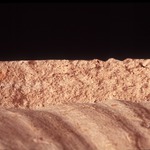
Plate 41: Fresh sherd break of LOR MA (width of field 24 mm)
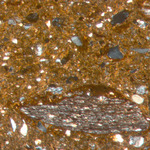
Plate 41.1: Photomicrograph of LOR MA (XPL) (width of field 1.74 mm)
<< Cologne Colour-coated ware
::
Lyon Colour-coated ware >>
 SGRP home page