North Italian Eggshell ware (NOI EG)
Two samples
General appearance
This is an exceptionally fine and highly fired fabric, producing vessels with a wall thickness of 1.0mm
or less. The fabric may be dark grey (4/0) throughout or oxidised in the break to red-brown (10R 5/6) with
dark grey surfaces. It is hard, with a conchoidal fracture and a smooth feel. The best known form in this
group found in Britain is the bowl with wall groove.
Hand specimen
The fabric is virtually inclusionless, with sparse fine silver mica in a fine clean and fused matrix.
Occasional grains of quartz, to 0.2mm, are also seen. The surfaces are intensely micaceous.
Thin section
Abundant well-sorted silt-grade quartz, with sparse larger inclusions measuring to
c 0.2mm, is visible in thin section. In general the clay is iron rich, with rare discrete opaque
grains. Rare threads of mica occur, but are not considered diagnostic.
Source
An unspecified source in northern Italy is the accepted provenance for these reduced wares, despite the
lack of kiln evidence (Greene 1979, 79).
Donor
Colchester Museums
Museums
Colchester Museums; Department of Greek & Roman Antiquities, The British Museum
References
Greene, K, 1979 Report on the excavations from Usk 1965–1976. The pre-Flavian finewares
Hawkes, C F C, & Hull, M R, 1947 Camulodunum. First report on the excavations at Colchester 1930–1939, Rep Res Comm Soc Antiq London 14
Marabini Moevs, M T, 1973 The Roman thin walled pottery from Cosa (1948–1954), Mem American Academy Rome, 32, Rome
(eggshell wares in
general)
Symonds, R P, & Wade, S, 1999 Roman pottery from excavations in Colchester, Colchester Archaeol Rep 10
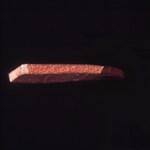
Plate 45: Fresh sherd break of NOI EG (width of field 24 mm)
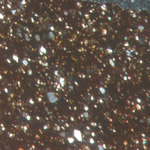
Plate 45.1: Photomicrograph of NOI EG (XPL) (width of field 1.74 mm)
<< North African Red-slipped ware
::
South Gaulish Colour-coated ware >>
 SGRP home page