Palestinian amphorae (PAL AM)
Four samples
This fabric is part of a long tradition of amphora production in Palestine, and includes the form defined
by Peacock & Williams as Class 46. It seems unlikely that body sherds of the type have been identified in
Roman Britain, but it is included here to highlight similarities with the
Peacock & Williams No 66 and
Peacock & Williams Class 12 amphorae.
General appearance
This is a distinctively orange (2.5YR 6/6–6/8) fabric, frequently with lighter surfaces (2.5YR 7/8,
2.5YR 6/6) and occasionally with red or white painted decoration on the shoulder. It is soft, with a harsh
surface and hackly fracture.The high density of inclusions results in a granular fabric that abrades
easily. A ribbed amphora, it is easily distinguished from Peacock & Williams Class 12 by its size,
colour and granular nature; in size it is more allied to the
Peacock & Williams No 66.
Hand specimen
The fabric is characterised by well-sorted inclusions of abundant quartz (occasionally iron coated,
0.2–0.3mm), together with common limestone (0.1–0.2mm), sometimes as surface eruptions up to 4.5mm.
Individual samples may have a range of other small calcareous inclusions, comprising microfossils and
shell, while sparse black to red-brown iron-rich inclusions and red clay pellets (0.1–0.5mm) are also
present.
Thin section
Under the petrological microscope well-sorted inclusions comprise abundant subrounded quartz, frequently
measuring 0.2–0.3mm although occasionally up to 0.4mm, in a slightly silty, calcareous matrix. While some
limestone fragments are in the same size range as the quartz, it commonly measures <0.2mm, rarely to
2.5mm. Other inclusions comprise sparse microfossils, opaques, clay pellets and mixed ferromagnesian
accessory minerals, and rare feldspar, polycrystalline quartz, chert and quartzite.
Source
Limited production is known in Palestine from the 2nd to the 7th century (Kingsley 1994–5, 45).
Donor
Center for Maritime Studies, University of Haifa (Israel)
Museums
None
References
Kingsley, S, 1994–5 Bag-shaped amphorae and Byzantine trade: expanding horizons, Bull Anglo-Israel Archaeol Soc 14, 39–56
Riley, J A, 1979 The coarse pottery from Benghazi, in Sidi Khrebish Excavations, Benghazi (Berenice) 2 (ed J A Lloyd), 91–497, Tripoli
Riley, J A, 1981 The pottery from cisterns 1977.1, 1977.2 and 1977.3, in Excavations at Carthage 1977 conducted by the University of Michigan 6 (ed J H Humphrey), 85–124, Ann Arbor
Rosenthal-Heginbottom, R, 1988 The pottery, in Excavations in Rehovot-in-the-Negev I: the northern church (Y Tsafrir, J Patrich, R Rosenthal-Heginbottom, I Hershkovitz & H D Nevo), Qedem 25, 78–96
Zemer, A, 1978 Storage jars in ancient sea trade, Haifa
Zevi, F, & Tchernia, A, 1969 Amphores de Byzacène au Bas Empire, Antiquités Africaines 3, 173–214
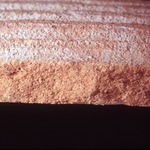
Plate 78: Fresh sherd break of PAL AM (width of field 24 mm)

Plate 78.1: Photomicrograph of PAL AM (XPL) (width of field 1.74 mm)
<< North African Fabrics
::
Peacock & Williams Class 7 amphorae >>
 SGRP home page