Peacock & Williams Class 47 amphorae (P&W AM 47)
Two samples
The type is commonly known as the ‘hollowfoot’ amphora or Käpitan II.
General appearance
This fabric is typically red- or orange-brown (2.5YR 5/6-5/8, 2.5YR 6/8), occasionally with slightly
darker (to 2.5YR 4/4) surfaces and thick grey (6/0–5/0) margins or core. It is a very hard fabric, harsh to
rough to the touch with an irregular fracture. The form is distinctive and easily identifiable, with the
arched handles particularly heavy in weight.
Hand specimen
While there is some variation in the size, sorting and proportion of different inclusions in this
fabric, it is united by the presence of ill-sorted sparse to common red-brown rock inclusions, measuring
between 0.3–2.0mm. Quartz, normally well-sorted, may range from sparse to abundant in quantity and measure
from <0.1-0.7mm (normally not 0.3mm>) in size. Other inclusions are sparse, but comprise
matrixcoloured clay pellets (to 3.5mm), fine red-brown iron-rich inclusions and occasionally fine silver
mica.
Thin section
In thin section abundant well-sorted small quartz and sparse but consistent feldspar and opaques
(0.05–0.1mm) with less frequent larger inclusions, measuring
c 0.2-0.3mm or occasionally larger, occur. Also sparse, but consistently occurring, are inclusions
of polycrystalline quartz, chert, quartzite and colourless ferromagnesian accessory minerals. Sparse grains
of both siltstone and sandstone are present, rarely with ferruginous cement. These inclusions therefore
account for some of the red rocks identified in the hand specimen, but others are likely to correspond to
the quartz-rich clay pellets, sometimes iron-rich and opaque, measuring 0.2–0.7mm, which are seen in thin
section. Only a single thread of muscovite mica is visible.
Source
While kiln evidence is lacking, distribution of the type suggests an Aegean source (Riley 1979,
189–93).
Donor
Museum of London
Museums
Colchester Museums; Museum of London
References
Kapitän, G, 1972 Le anfore del relitto romano di Capo Ognina (Siracus), in Recherches sur les amphores romaines, Collection de l’Ecole Française de Rome 10, 243–52, Rome
Peacock, D P S, 1977d Late Roman amphorae from Chalk near Gravesend, Kent, in Roman pottery studies in Britain and beyond. Papers presented to John Gillam, July 1977 (eds J Dore & K Greene), BAR Suppl Ser 30, 295–300
Riley, J A, 1979 The coarse pottery from Benghazi, in Sidi Khrebish Excavations, Benghazi (Berenice) 2 (ed J A Lloyd), 91–497, Tripoli
Symonds, R P, & Wade, S, 1999 Roman pottery from excavations in Colchester, Colchester Archaeol Rep 10
See the related record on the Atlas of Roman Pottery on the Potsherd website
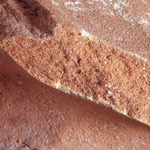
Plate 84: Fresh sherd break of P&W AM 47 (width of field 24 mm)

Plate 84.1: Photomicrograph of P&W AM 47 (XPL) (width of field 1.74 mm)
<< Peacock & Williams Class 44 amphorae
::
Peacock & Williams Class 50 amphorae >>
 SGRP home page