Peacock & Williams Class 50 amphorae (P&W AM 50)
Single sample
The type is frequently known as the ‘Chalk’ amphora.
General appearance
Our sample is a very hard brown-red (5YR 6/6) fabric with tan (7.5YR 7/4-6/4) surfaces, a rough feel and
hackly fracture. Typically sherds may have a cream outer surface (Peacock & Williams 1986, 201).
Hand specimen
This fabric is composed of a slightly golden micaceous clay containing ill-sorted inclusions. Small
quartz (0.1–0.2mm) is common, while larger inclusions comprise common quartz, and sparse feldspar (normally
0.1–1.0mm), red-brown and black rock fragments and limestone (both 0.5–3.0mm).
Thin section
A calcareous clay with sparse quartz silt, which contains common coarse to very coarse subangular
sand-grade material, composed mainly of quartz, together with sparse grains of untwinned feldspar, chert,
limestone and other rock fragments. Occasional subrounded grains of altered lava, and a single grain of
pyroxene (c 1.0mm) are also present. Subangular grains of amphibole up to 0.3mm, plagioclase feldspar,
biotite and zircon occur rarely.
Source
No source can be suggested for this amphora type.
Donor
Castle Museum, Norwich
Museums
Colchester Museums; Castle Museum, Norwich
References
Darling, M J, 1993 The Roman pottery, in Caister-on-Sea: excavations by Charles Green 1951–1955 (M Darling with D Gurney) East Anglian Archaeol 60, 153–218
Peacock, D P S, 1977d Late Roman amphorae from Chalk near Gravesend, Kent, in Roman pottery studies in Britain and beyond. Papers presented to John Gillam, July 1977 (eds J Dore & K Greene), BAR Suppl Ser 30, 295–300
Symonds, R P, & Wade, S, 1999 Roman pottery from excavations in Colchester, Colchester Archaeol Rep 10
See the related record on the Atlas of Roman Pottery on the Potsherd website
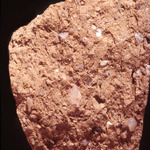
Plate 85: Fresh sherd break of P&W AM 50 (width of field 24 mm)

Plate 85.1: Photomicrograph of P&W AM 50 (XPL) (width of field 1.74 mm)
<< Peacock & Williams Class 47 amphorae
::
Peacock & Williams No 66 amphorae >>
 SGRP home page