Peacock & Williams Class 7 amphorae (P&W AM 7)
Single sample
The type is also known as Dressel 21–2.
General appearance
Our sherd is pink-brown (2.5YR 6/6) with pink-cream (5YR 7/4) surfaces and a very thin cream-coloured
(10YR 8/3) self slip on the outside. Smooth and hard, it has an irregular fracture.
Hand specimen
This fabric comprises a fine, calcareous clay with common fine mica (to 0.3mm on the surfaces),
primarily gold but some silver. Inclusions are ill sorted with calcareous ones abundant in aggregate, and
consisting of limestone, shell and microfossils. Limestone is common, occurring in two size ranges: a
groundmass of small (<0.2mm) grains and larger ones measuring to 0.9mm, while microfossils and shell are
less common and occur between 0.2–1.5mm. Other inclusions are sparse, but include red-brown rock and
iron-rich inclusions (0.3–0.5mm) and quartz (0.4–0.7mm).
Thin section
A micaceous (mostly white), calcareous clay containing common subangular sand grains (up to 1.2mm)
occurs. Included in this group are quartz, fine-grained calcite, schistose rock and feldspar. Some of the
calcite is clearly derived from shell. Silt-grade material is common, while microfossils are sparse.
Source
This sample is in a different fabric from that described by Peacock & Williams, although the
petrology suggests that it could share the same general source area in Campania or Lazio (D Williams, pers
comm).
Donor
Museum of London
Museums
Colchester Museums; Museum of London
References
Symonds, R P, & Wade, S, 1999 Roman pottery from excavations in Colchester, Colchester Archaeol Rep 10
Zevi, F, 1966 Appunti sulle anfore romane, Archaeologia Classica 18, 207–47
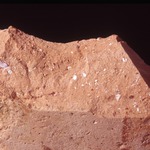
Plate 79: Fresh sherd break of P&W AM 7 (width of field 24 mm)
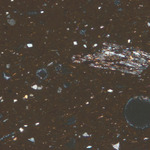
Plate 79.1: Photomicrograph of P&W AM 7 (XPL) (width of field 1.74 mm)

Plate 79.2: Photomicrograph of P&W AM 7 (XPL) (width of field 1.74 mm)
<< Palestinian amphorae
::
Peacock & Williams Class 9 amphorae >>
 SGRP home page