Peacock & Williams Class 9 amphorae (P&W AM 9)
Two samples
This group provides an additional example of one of many fabrics (see also
Rhodian amphorae 1–2) found in Britain, from which the vessel
with peaked-handles, also known as Camulodunum 184, was produced.
General appearance
This fabric is pink-brown (2.5YR 6/6) with a buff (10YR 8/3), sometimes patchy, external slip. It is
very hard with a hackly break and rough surfaces.
Hand specimen
It is an abundantly calcareous clay, mostly <0.1–0.2mm with some larger fragments to 0.5mm. The
remainder of the inclusions are ill sorted, ranging in size from 0.5–2.0mm, with no individual inclusion
falling into a particular size grouping. Feldspar is common, as are rounded or subrounded aggregate rock
fragments, normally clear but occasionally with dark grains. Fine-grained, red-brown argillaceous
inclusions, red igneous rocks, of varying texture, and quartz are sparse.
Thin section
The sample comprises an isotropic calcareous clay, containing common ill-sorted angular to subangular
inclusions of clear twinned and untwinned volcanic feldspar, sparse rock fragments (mainly lava) and rare
quartz, up to 1.5mm. Rare cleavage fragments of brown hornblende up to about 0.3mm are also present, as are
rare flecks of mica. Silt-grade material is common.
Source
A source in the Mediterranean or Aegean is likely, although no exact location can be proposed on the
basis of either form or fabric.
Donor
Museum of London
Museum
Museum of London
References
Davies, B J, Richardson, B, & Tomber, R S, 1994 The archaeology of Roman London 5. A dated corpus of early Roman pottery from the City of London, CBA Res Rep 98
Tyers, P A, 1984 An assemblage of Roman ceramics from London, London Archaeol 4(14), 357–75
See the related record on the Atlas of Roman Pottery on the Potsherd website
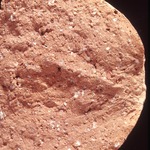
Plate 80: Fresh sherd break of P&W AM 9 (width of field 24 mm)

Plate 80.1: Photomicrograph of P&W AM 9 (XPL) (width of field 3.5 mm)
<< Peacock & Williams Class 7 amphorae
::
Peacock & Williams Class 12 amphorae >>
 SGRP home page