Soller White ware (SOL WH)
Three samples
General appearance
Our samples range in colour from cream (2.5Y 8/2) to buff (5YR 8/4) to pale orange (7.5YR 7/6) with
surfaces of pale yellow (10YR 8/6) or pale orange (7.5YR 8/6). They are very hard, with a hackly fracture
and harsh/pimply feel, due to inclusions protruding the surface as seen on Plate 58b. The large vessel size
and broad, flat flange is also distinctive of most of the products of Verecundus 2, as is the placement of
trituration grit on the lower half of the vessel (K Hartley, pers comm). Unstamped collared mortaria were
also made, but examples are not included here.
Hand specimen
Characteristically the clay matrix is dense, containing abundant well-defined and well-sorted large
inclusions, normally measuring
c 0.5–1.0mm, with occasional fragments up to 4.0mm. Subrounded quartz (some of it polycrystalline
or aggregate), sometimes pink in colour, is the most common inclusion and occurs abundantly. The remaining
inclusions are sparse, but feldspar, red-brown iron-rich fragments, red ?clay pellets (to 2.0mm) and
sandstone are also present. Additional red or red-brown iron-rich grains also occur in a smaller size
(0.1–0.4mm). Despite the general appearance of a clean clay matrix, some silt-sized quartz and silver mica
are visible in the hand specimen. In our single sample with trituration grits, few are visible, but they
measure between 3.0–5.0mm and comprise subrounded polycrystalline quartz and sparse red-brown rock
fragments. On other vessels the trituration grits, which are restricted to the bottom of the vessel, can be
described as moderately well sorted (K Hartley, pers comm).
Thin section
This fabric has a fine clay matrix containing common silt and sparse muscovite mica. Well-sorted
inclusions are common, measuring 0.3–0.8mm although larger fragments are present, and include (in order of
decreasing occurrence) quartz (some polycrystalline), quartzite (sometimes metamorphosed) and, less
frequently, siliceous fine-grained sandstone, chert, opaques and feldspar.
Source
These vessels were produced in the workshops of Verecundus at Soller, Kreis Düren, in Lower Germany.
Neither the full range of types produced, nor the chronological range of production will be known until
further investigation of the site is undertaken (Dr Paul Wagner, pers comm).
Donors
Museum of London; York Archaeological Trust
Museums
Museum of London; Eifeler Landschaftsmuseum, Genovevaburg, Mayen (Germany)
References
Hartley, K F, 1984a A note on the mortarium potter Verecundus, in Romischer Töpfereibezirk bei Soller, Kreis Düren (D Haupt), Beiträge zur Archäologie des Römischen Rheinlands 4/ Rheinische Ausgrabungen 23, 471–2, Bonn
Haupt, D, 1984 Romischer Töpfereibezirk bei Soller, Kreis Düren, Beiträge zur Archäologie des Römischen Rheinlands 4/ Rheinische Ausgrabungen 23, 391–497, Bonn
Okrusch, M, & Strunk-Lichtenberg, G, 1984 Porositäts und dunnschliffuntersuchungen an mortaria aus Soller und Lincoln, in Romischer Töpfereibezirk bei Soller, Kreis Düren (D Haupt), Beiträge zur Archäologie des Römischen Rheinlands 4/ Rheinische Ausgrabungen 23, 473–5, Bonn
Richardson, B, 1986 The waterfront group: coarsewares and non-samian finewares, in The Roman quay at St Magnus House, London. Excavations at New Fresh Wharf, Lower Thames Street, London 1974–1978 (L Miller, J Schofield & M Rhodes), London Middlesex Archaeol Soc Spec Pap 8, 106–38
See the related record on the Atlas of Roman Pottery on the Potsherd website
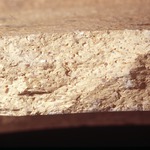
Plate 58a: Fresh sherd break of SOL WH (width of field 24 mm)

Plate 58b: Trituration grits on SOL WH (width of field 24 mm)

Plate 58.1: Photomicrograph of SOL WH. The large inclusion may be a trituration grit (XPL) (width of field 1.74 mm)

Plate 58.2: Photomicrograph of trituration grits on SOL WH (XPL) (width of field 1.74 mm)
<< Rhineland White ware
::
?Spanish White ware >>
 SGRP home page