South-West White-slipped ware (SOW WS)
Five samples
Both flagons and mortaria were produced in this fabric, and are included here.
General appearance
Typically the fabric is red-brown or orange-brown (10R 5/8, 2.5YR 5/8), often with a grey or
green-grey core (5/0, 5Y 5/1) and cream (2.5Y 8/2–8/4) or pale orange (7.5YR 8/4) slipped surfaces.
Sherds are hard with a hackly fracture and a rough feel where unslipped, smooth where slipped.
Hand specimen
This fabric has well-sorted inclusions (usually 0.3–0.5mm) of abundant quartz, ranging from 0.2–0.9mm,
and sparse but consistent red-brown and black iron-rich grains (0.2–0.5mm). Less frequent are sparse
large quartz-rich clay pellets, red-brown or occasionally white (1.0–2.5mm). The slip is distinctively
mica rich, including fine gold flakes, occasionally up to 0.3mm. Trituration grits comprise common
well-sorted monocrystalline and polycrystalline quartz between 1.0–3.5mm; unidentified dark red grains of
a similar size, and ?sandstone (possibly equating to quartz-rich opaques in thin sections), up to 5.0mm,
are sparse.
Thin section
A clean clay matrix containing abundant well-sorted inclusions, frequently rounded and measuring
c 0.2–0.6mm, is present. Quartz is abundant, while other rare inclusions are feldspar, quartzite,
polycrystalline quartz, flint and ferruginous pellets. Light-coloured quartz-rich clay pellets vary in
size from 0.5–1.0mm>, many being too amorphous to measure. Trituration grits comprise common
polycrystalline and monocrystalline quartz and rare quartz-rich opaques, most
c 1.5mm.
Source
Although no kilns are known, the fabric is thought to originate in south-east Gloucestershire or north
Wiltshire, possibly in the Wanborough area, with the largest number of examples recorded from Cirencester
(K Hartley, pers comm).
Donors
Bath Archaeological Trust; City Museum and Art Gallery, Gloucester
Museums
Roman Baths Museum, Bath; Corinium Museum, Cirencester; Swindon Museum
References
Hartley, K F, 1993a The mortaria, in Report on the excavations at Usk 1965–1976. The Roman pottery (ed W H Manning), 389–425
Hartley, K F, 2001 Mortaria, in The Romano-British ‘small town’ at Wanborough, Wiltshire. Excavations 1966–1976 (A S Anderson, A P Fitzpatrick & J S Wacher) Britannia Monogr Ser 19, 220–31

Plate 160a: Fresh sherd break of SOW WS (width of field 24 mm)
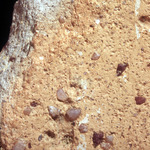
Plate 160b: Trituration grits on SOW WS (width of field 24 mm)

Plate 160.1: Photomicrograph of SOW WS (XPL) (width of field 1.74 mm)

Plate 160.2: Photomicrograph of trituration grits on SOW WS (XPL) (width of field 3.5 mm)
<< Savernake Grog-tempered ware
::
next county: Yorkshire (North & South) >>
 SGRP home page